
Pembroke x 100 California – Case Study
Published on: November 3rd, 2026
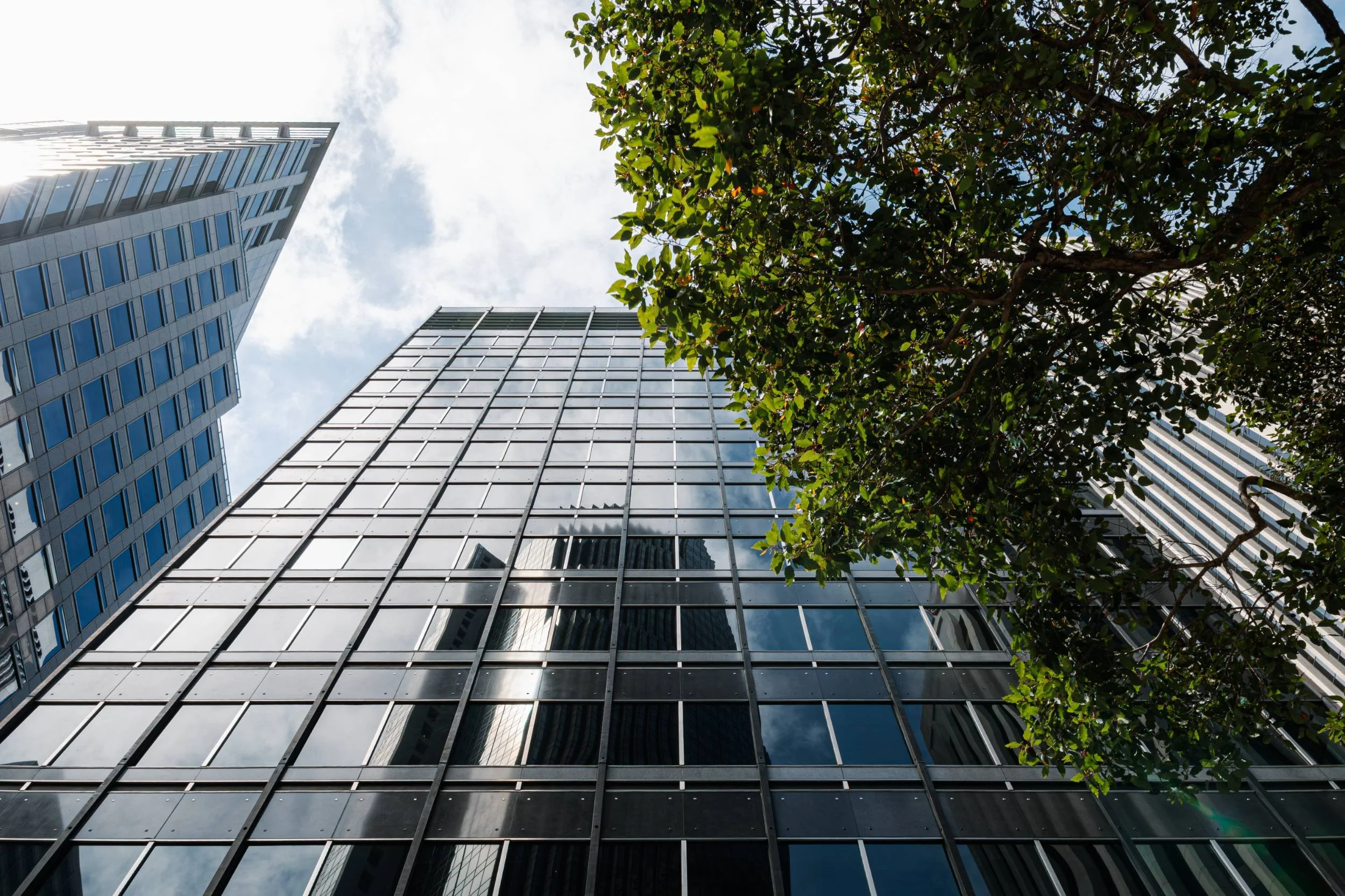
On June 30, my team spent a full day filming a day-in-the-life commercial for a Pembroke property, 100 California Street, an office tower in San Francisco's Financial District. It's a commercial real estate video built around three actors and three different commutes, all ending at the same building.
Pembroke hoped to promote the property’s well-established customer experience program along with the building’s newly completed amenity offering - and they wanted to show what a typical workday feels like. So instead of a tour, we developed this video around people. Each actor made their own way into the city, and the building became the place where their time overlapped.
It ended up being one of the most planned-out shoots we did all year. We scouted, ran a separate photo day, pulled city and Port permits, and had about ten crew plus talent on the day. Here's how it came together, from the kick-off call to the final cut.
The Client: 100 California Street, a Pembroke Property.
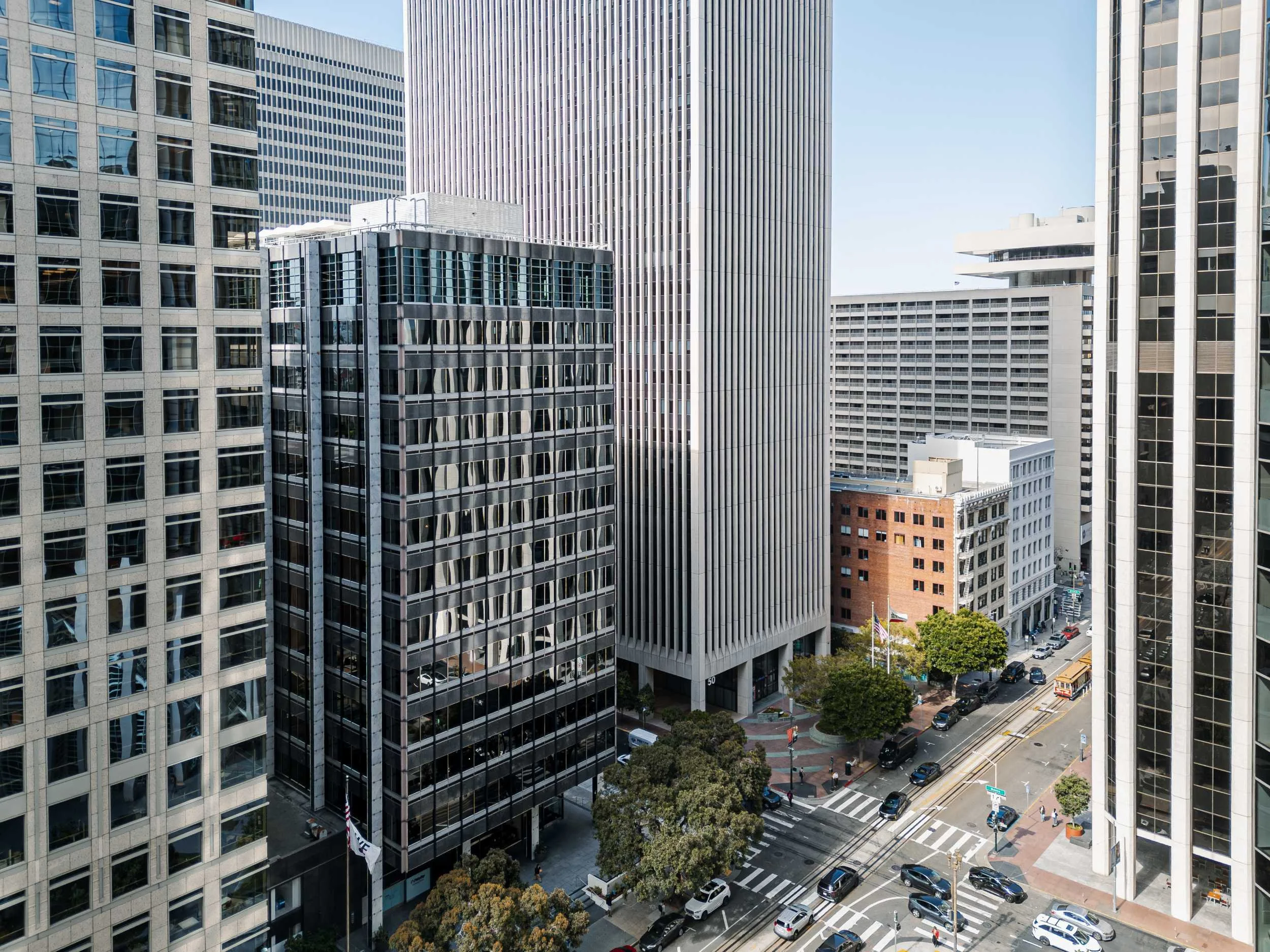
Pembroke is a global real estate firm with offices from Boston, to San Francisco, London and Tokyo, and 100 California is one of their San Francisco properties. It sits right at the edge of San Francisco’s FiDi where everything starts sloping toward the water. Walk a few blocks and you're at the cable car turnaround, Embarcadero BART and the Ferry Building.
The Brief: Give People a Reason to Come In
Pembroke wanted something short and punchy that gave people a reason to come in to the office. It also had to work as evergreen content for brokers and tenants, current and future, long after launch.
That evergreen piece ended up shaping almost every decision. If an idea felt trendy or tied to one season, it was out. My gut check was basically, "Will this still look right in two years?"
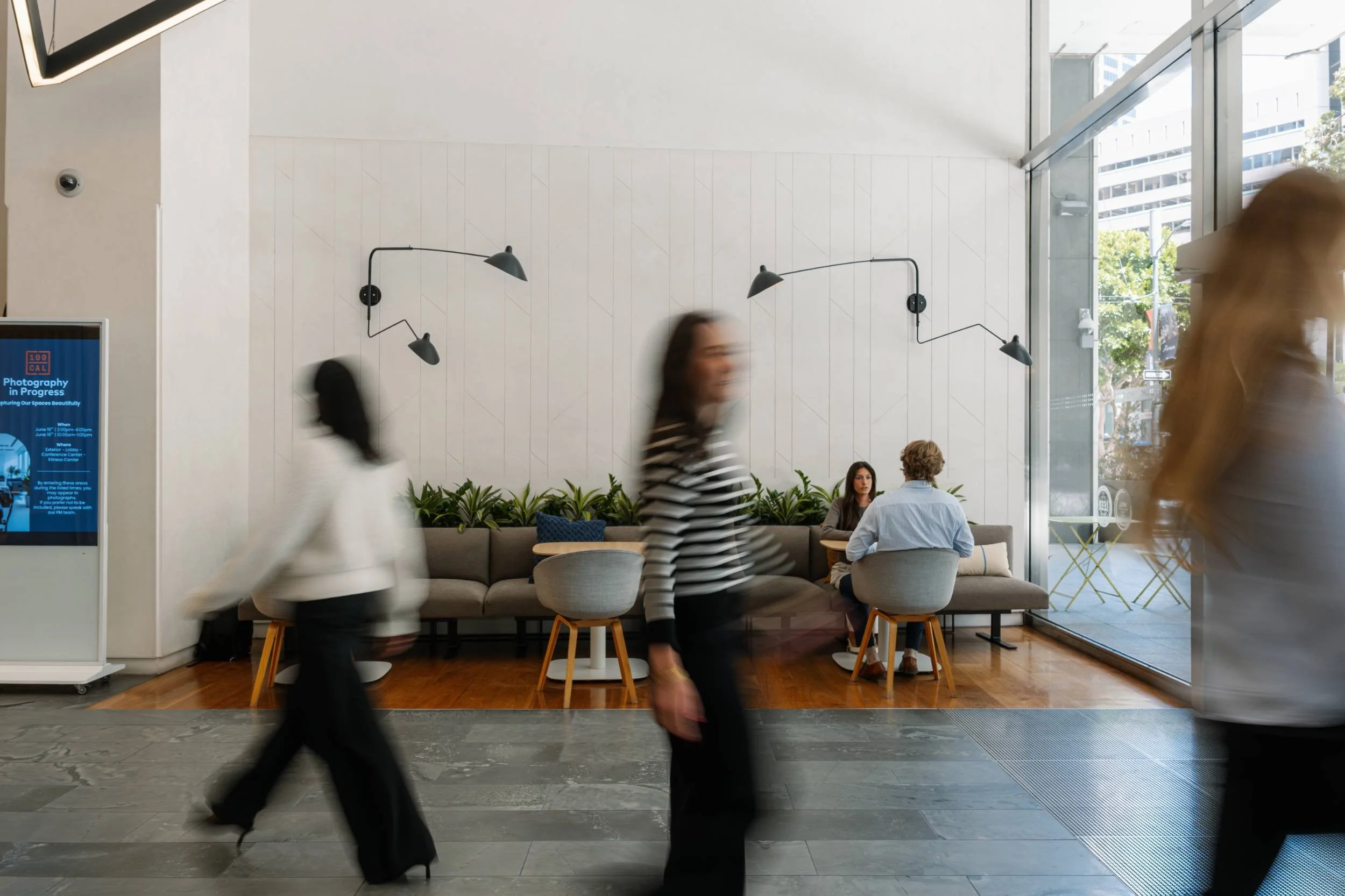
The concept – three storylines that converge. Each actor gets their own commute, and 100 Cal is where their days meet. That let us show the things that actually make the building a great place to work: the BART connection, a doorman who knows your name, engaging tenant events, a bike storage room, the thoughtfully developed gym, flexible shared meeting space, Ferry Building views and a tenant app, that reserves rooms without a phone call.
It also solved a problem I run into on pretty much every building video. Amenities by themselves are boring. A gym is a room with machines in it. But put that gym in the middle of someone's day, after they biked in and before their 11am meeting, suddenly it tells you something about what working there is like.
The commute gave every amenity a reason to be on screen. That's really the whole case for a day-in-the-life video on an office building: people remember a workday, not a list of features.
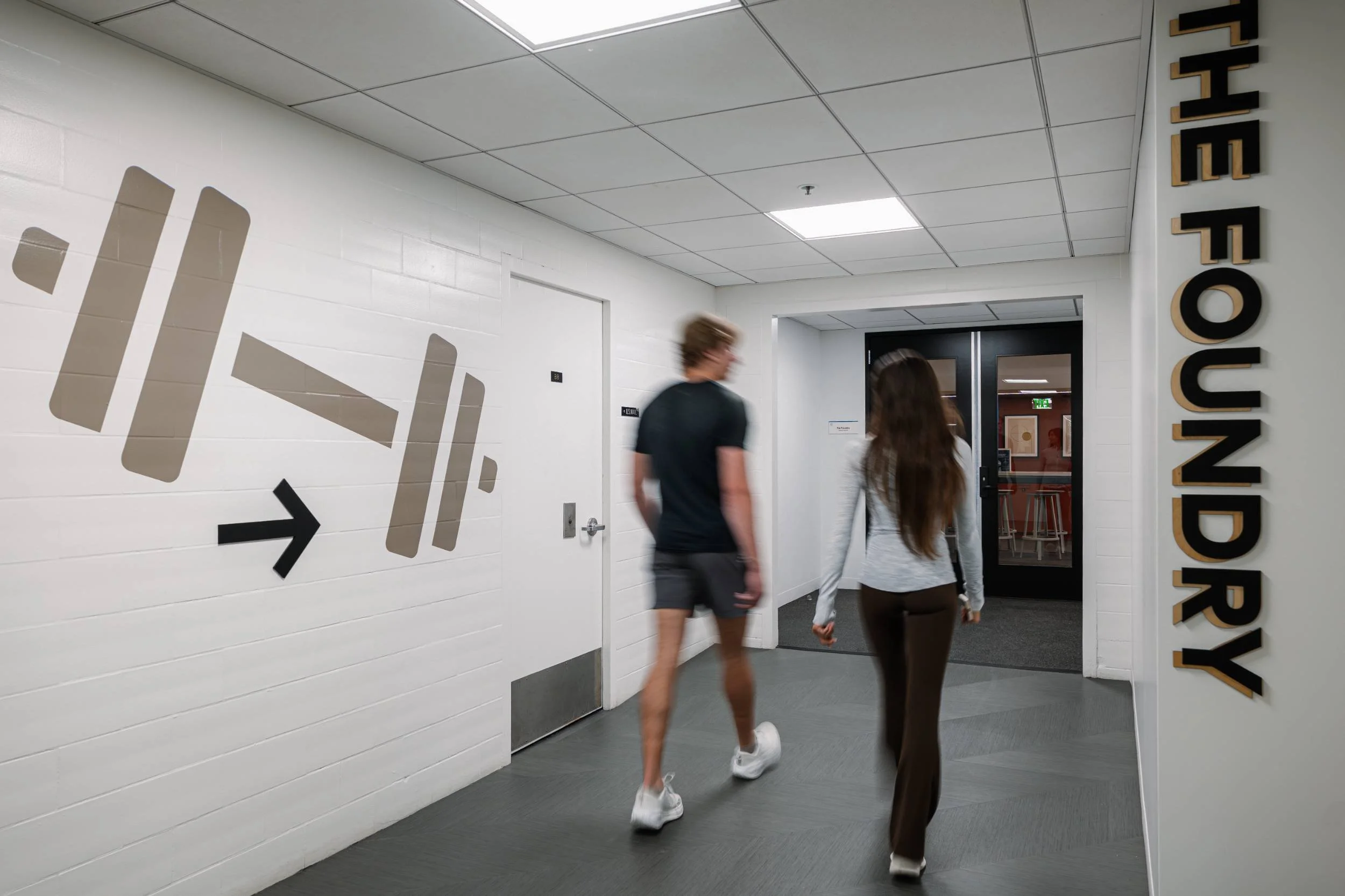
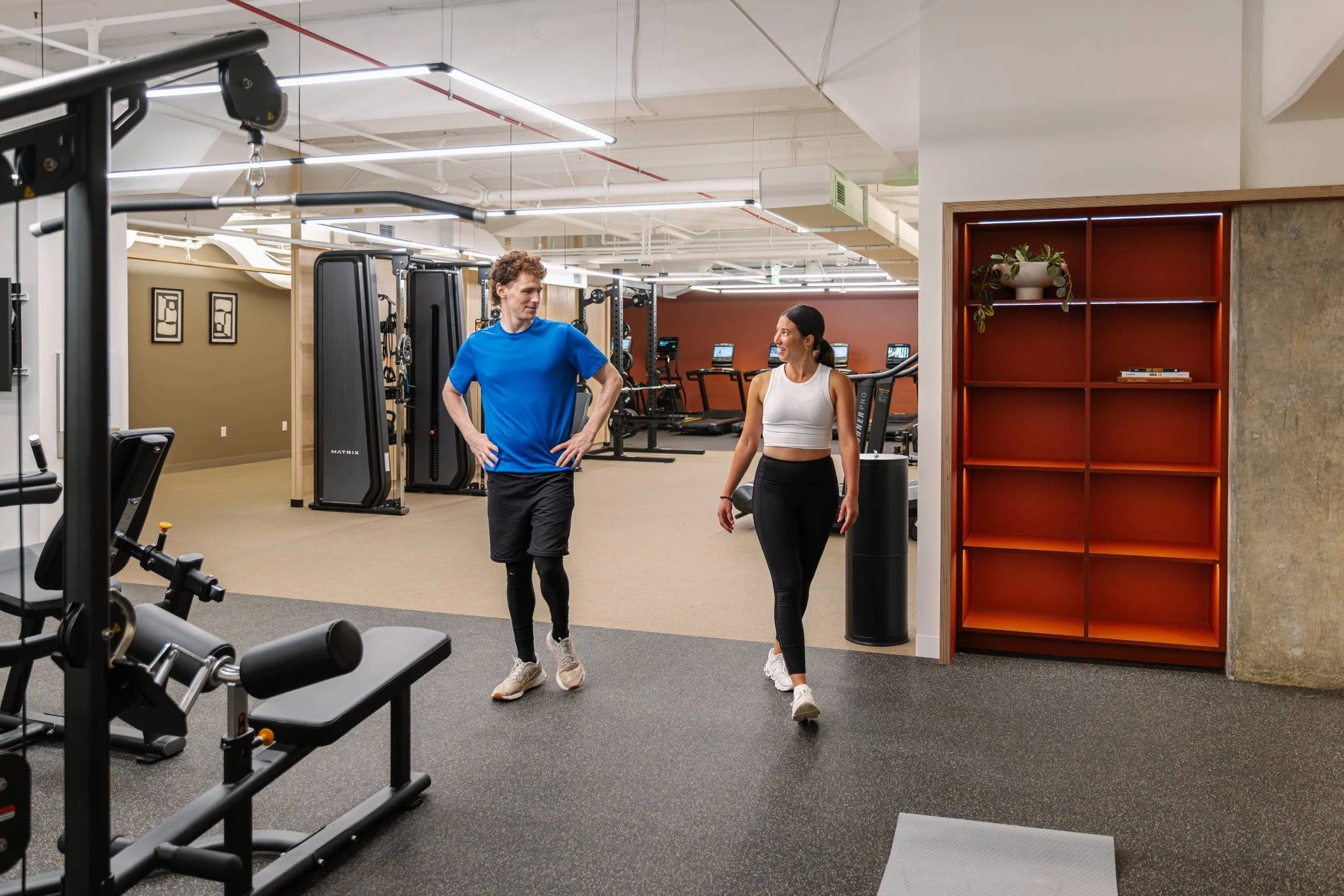
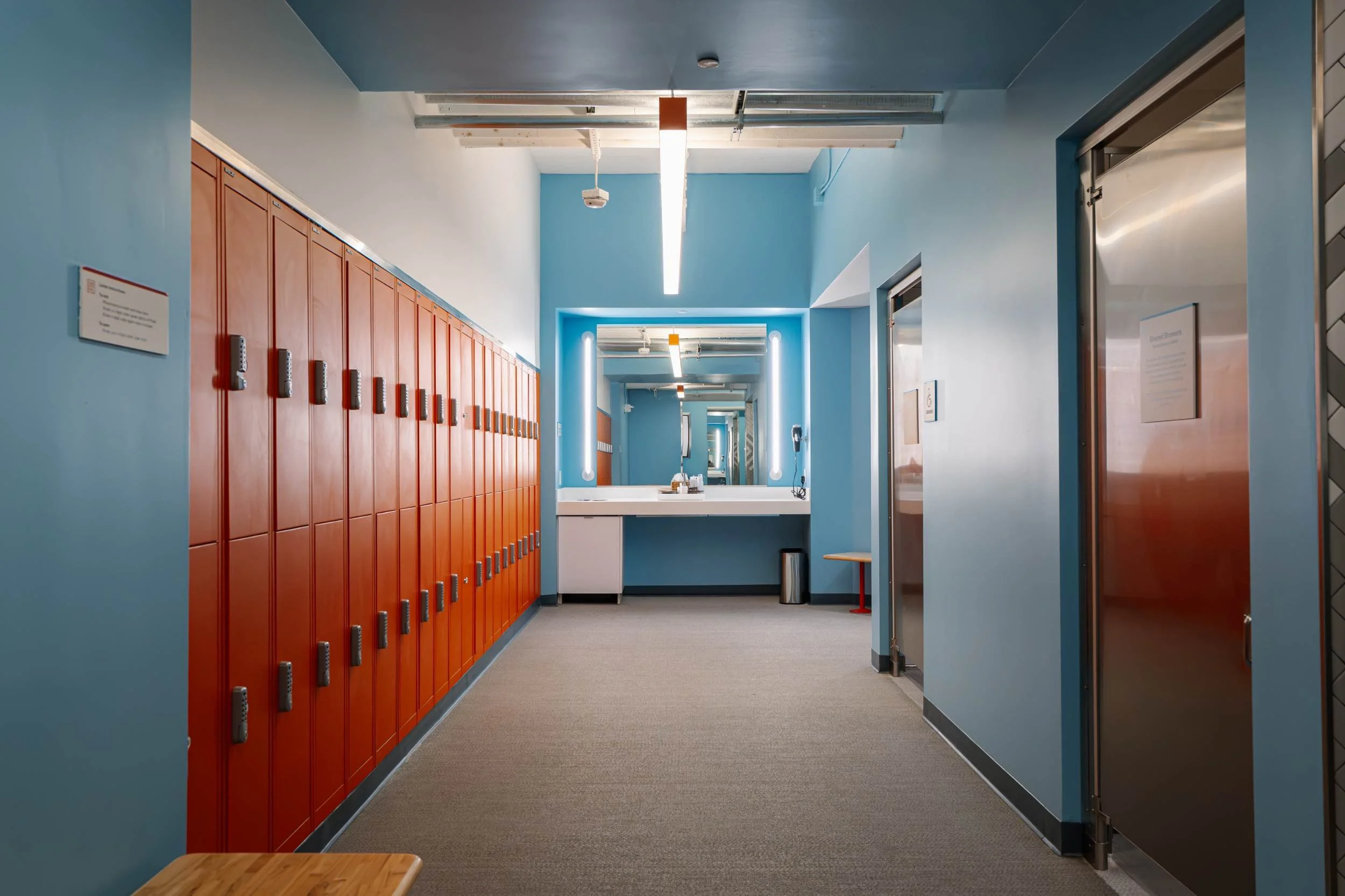
As planning went on, the project kept growing (in a good way) to include a fresh set of photos alongside the video. The crew grew with it.
We added a photographer, an assistant, hair and makeup, an Assistant Director and three actors on top of the video team.
Scouting and a Photo Day (Before the Video Day)
Before anything went on the calendar, I walked the building with a camera. If you take one tip from this post for your own office building video, make it this one. I wanted to know where the good light was, and where the bike room actually lived. Those photos went straight into our project folder so the team could plan off the same reference instead of my memory.
On June 15 we ran a separate commercial photography day, about two hours of interiors, architecture and lifestyle. I shot each space empty first, then brought the models in, so we only had to hit every room once. Pembroke’s team briefed the models while I worked through the empty spaces, and we moved floor to floor without doubling back.
Looking back, it was basically a dress rehearsal for June 30.
I figured out how each room handled light and how long it took to haul gear between floors. And Pembroke got a fresh set of building photos weeks before the video existed, which their marketing team could start using right away.
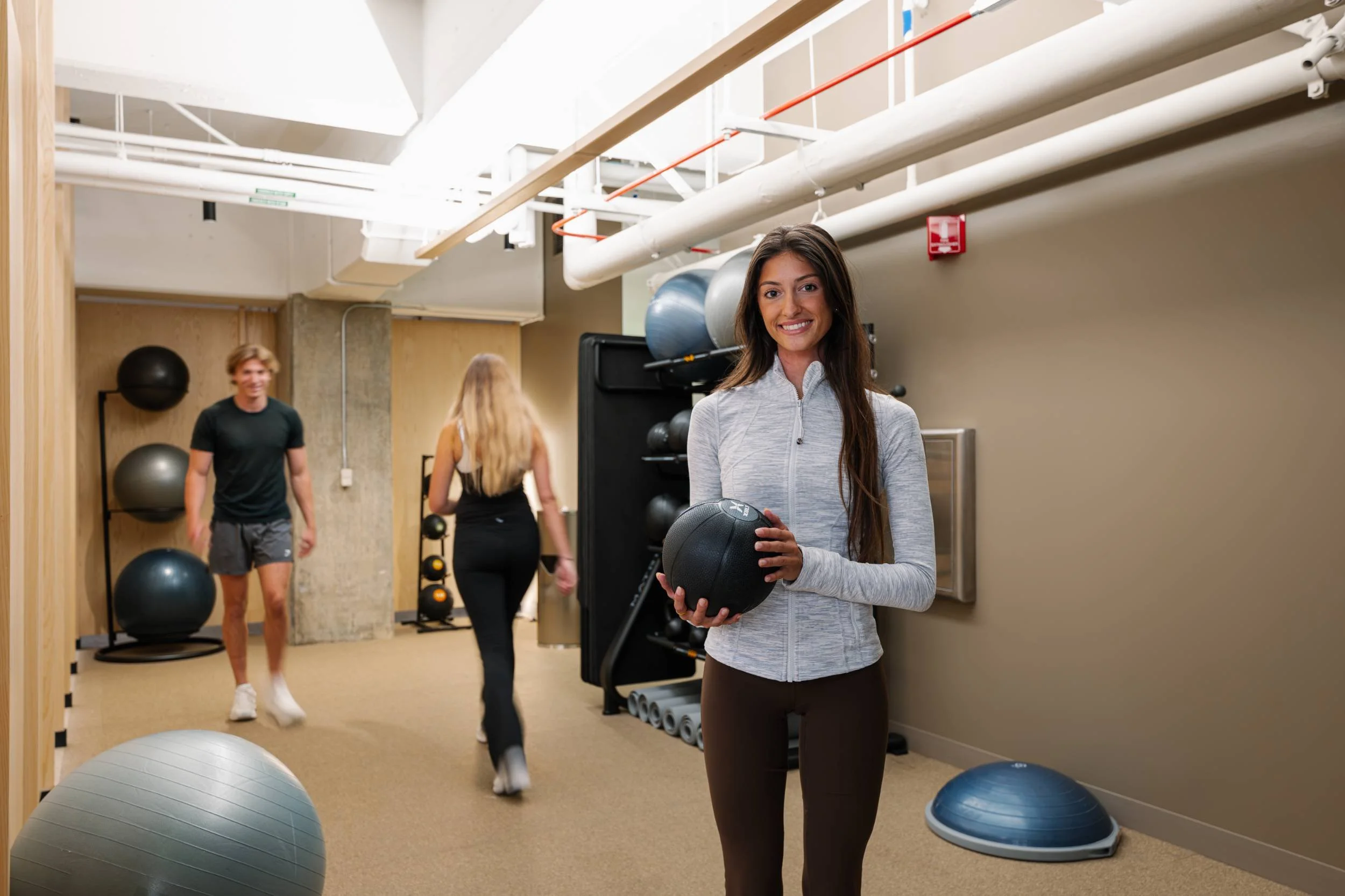
Pembroke’s feedback was quick and specific, which I always appreciate. The gym area was lively with members mid-workout, which is a pretty good problem for a building to have. It was also a reminder that this was a working building, not a set, and we planned the gym scenes for the video day around that.
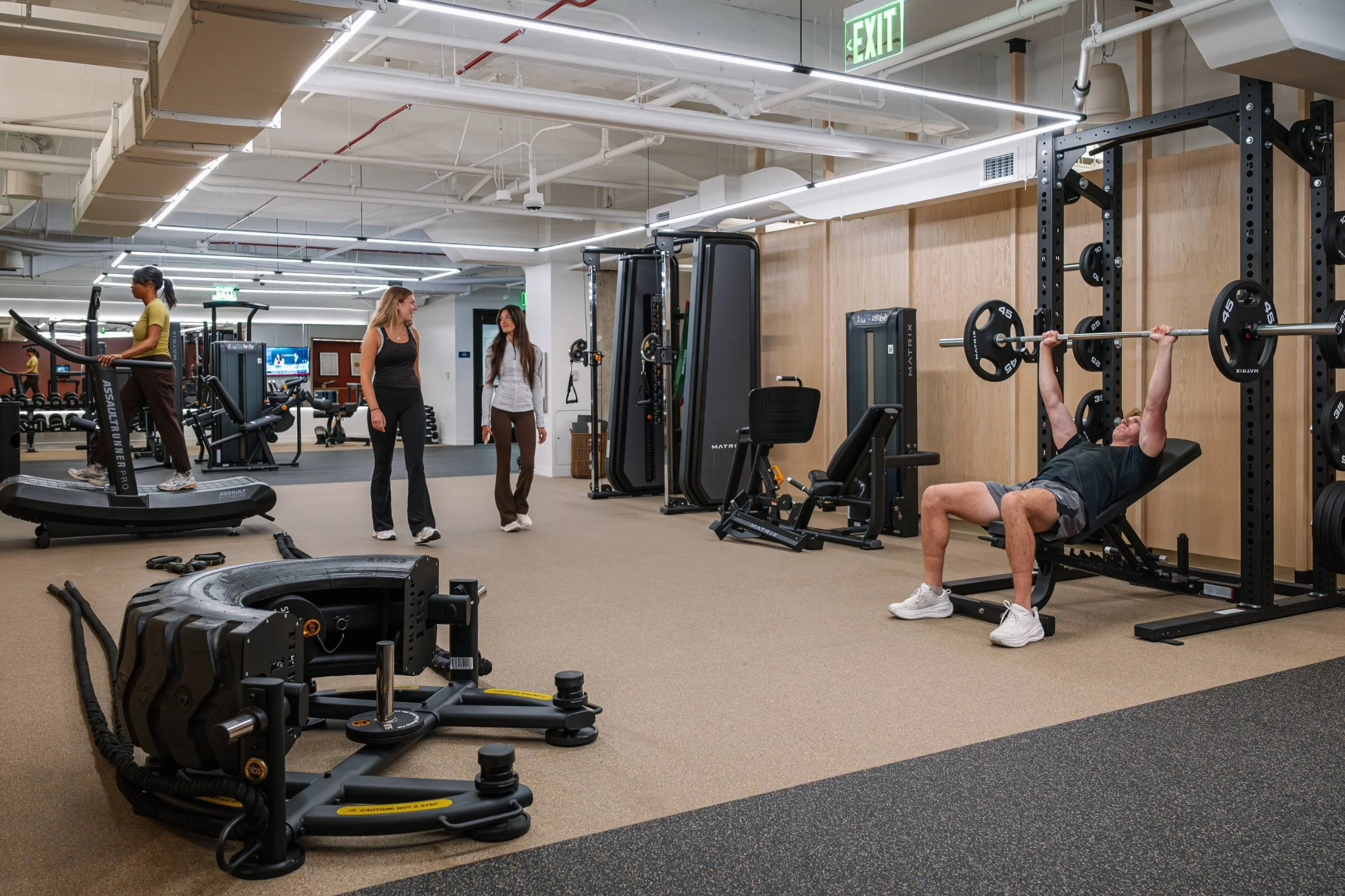
Storyboarding With AI-Assisted Visuals
Once the creative concept was approved, I built a kickoff page with the agenda, run of show, cast and shot list.
For the storyboard, we skipped the stick figures and used AI-generated visuals for each beat, so Pembroke’s team could see roughly how every frame would look before anyone showed up on set. This has become one of my favorite tools for client approvals. People react to a picture way faster than they react to a paragraph describing a shot.
Pembroke had notes back the same day. A few shots got reworked based on how the building actually runs day to day. My favorite change was the elevator. We leaned into the interior decals while the actor’s headed upstairs, same as we did on photo day, and it turned into one of the more memorable transitions in the piece. We also planned a few exterior shots that give a little nod to MIXT, 100 CAL’s restaurant on site.
To keep everyone aligned, we sent the call sheet as a PDF and set up a "Client Action Items" page in so Pembroke could see exactly what we needed from them and by when.
Pembroke’s team also connected us with their Community Manager, who oversees the building's tenant app, my100Cal, and they gave us temporary access so we could film a real conference room booking instead of faking the phone screen. We set up base camp in their newly built-out spec suite, with a green room for gear and hair and makeup plus a set for the actors' "at work" scenes in the morning.
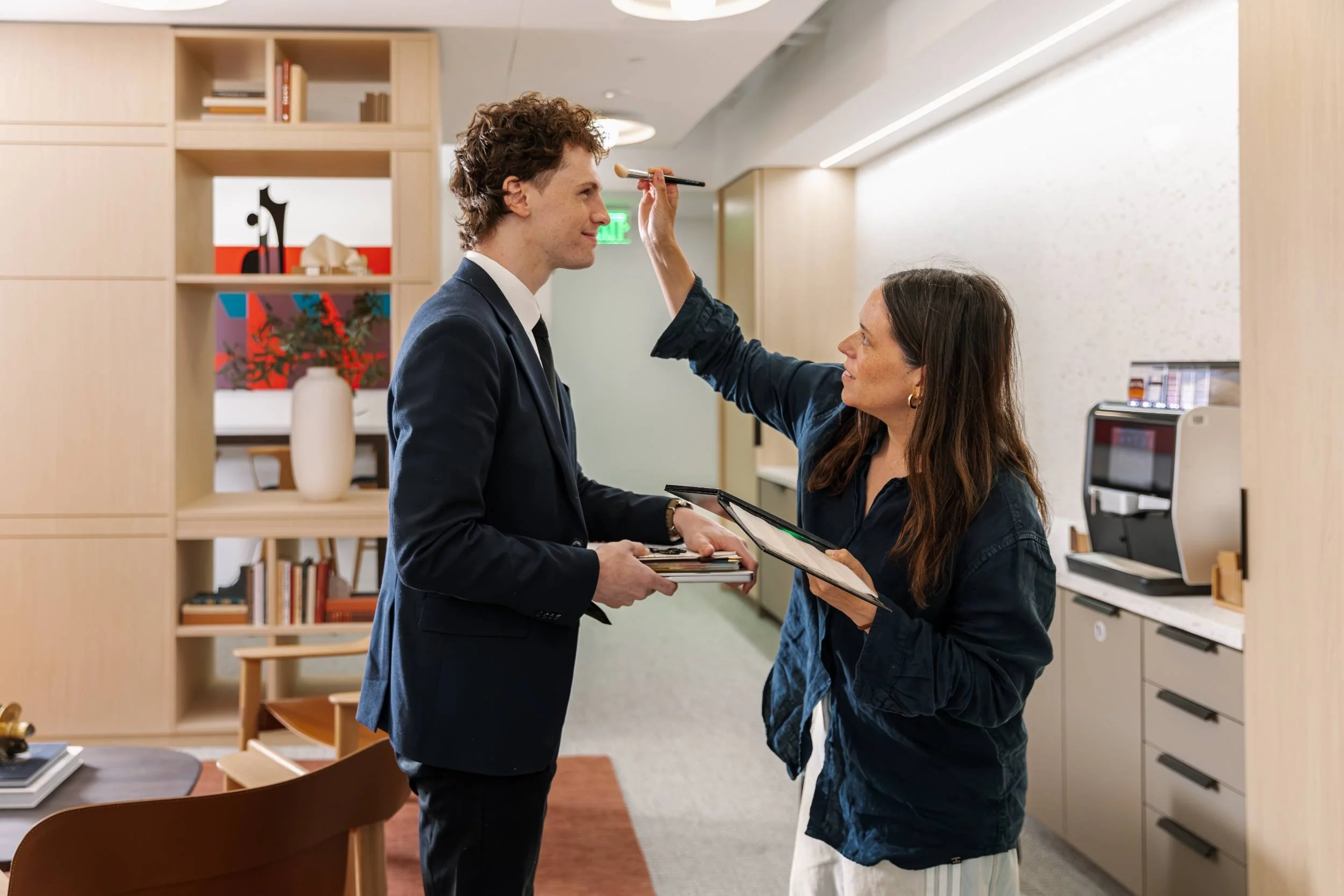
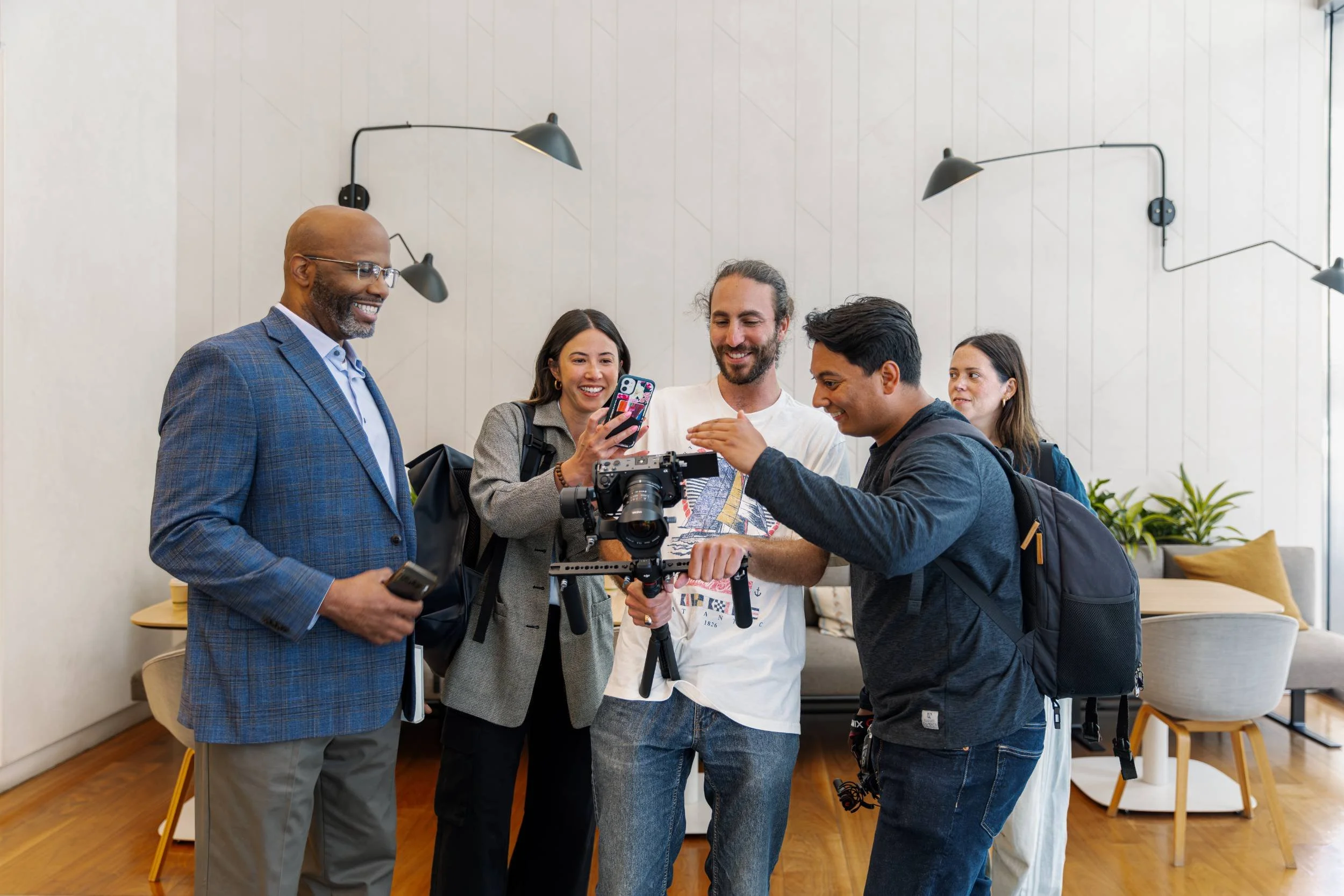
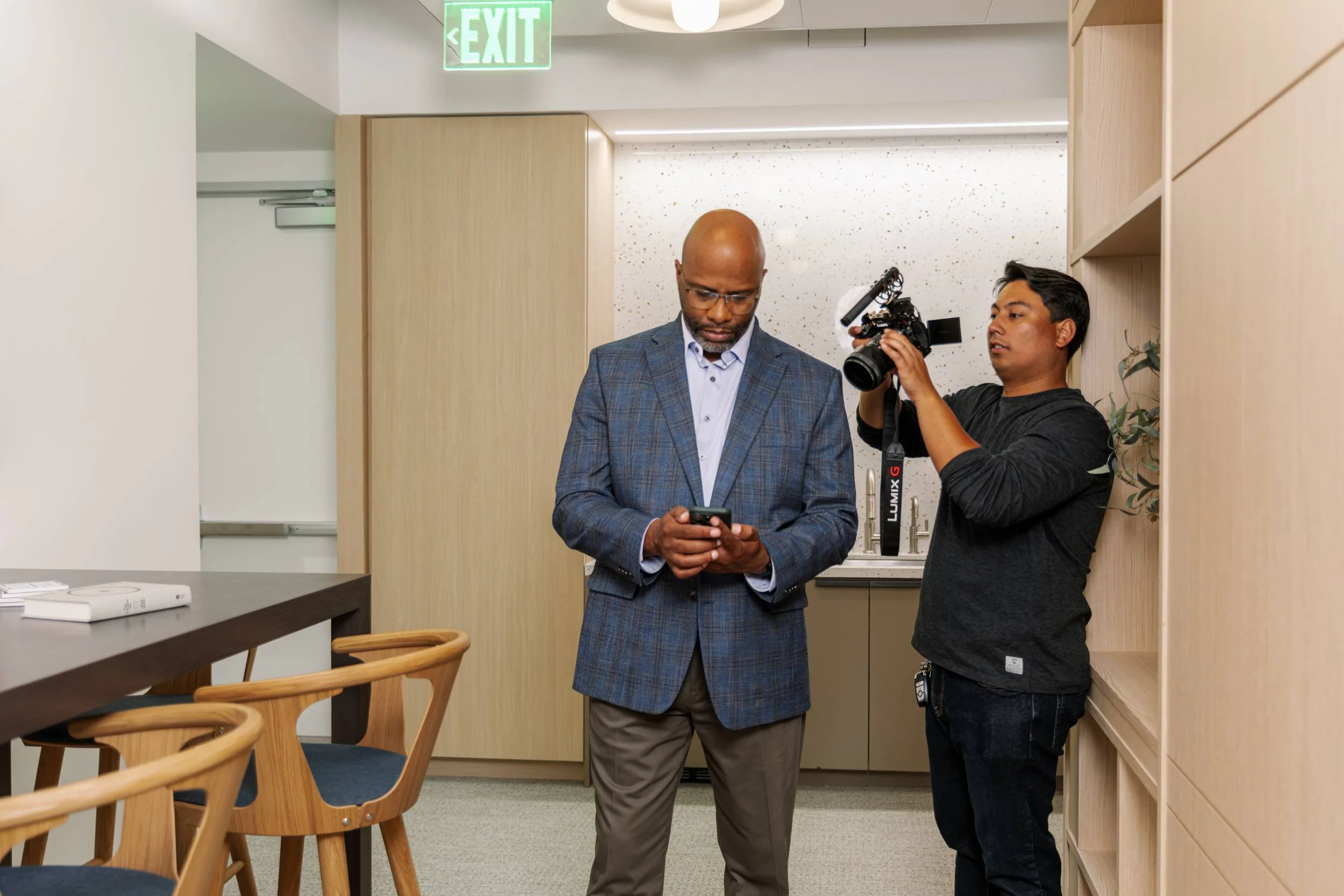
Behind-the-Scenes with our fabulous Hair & Make Up lead Angela Shippen.
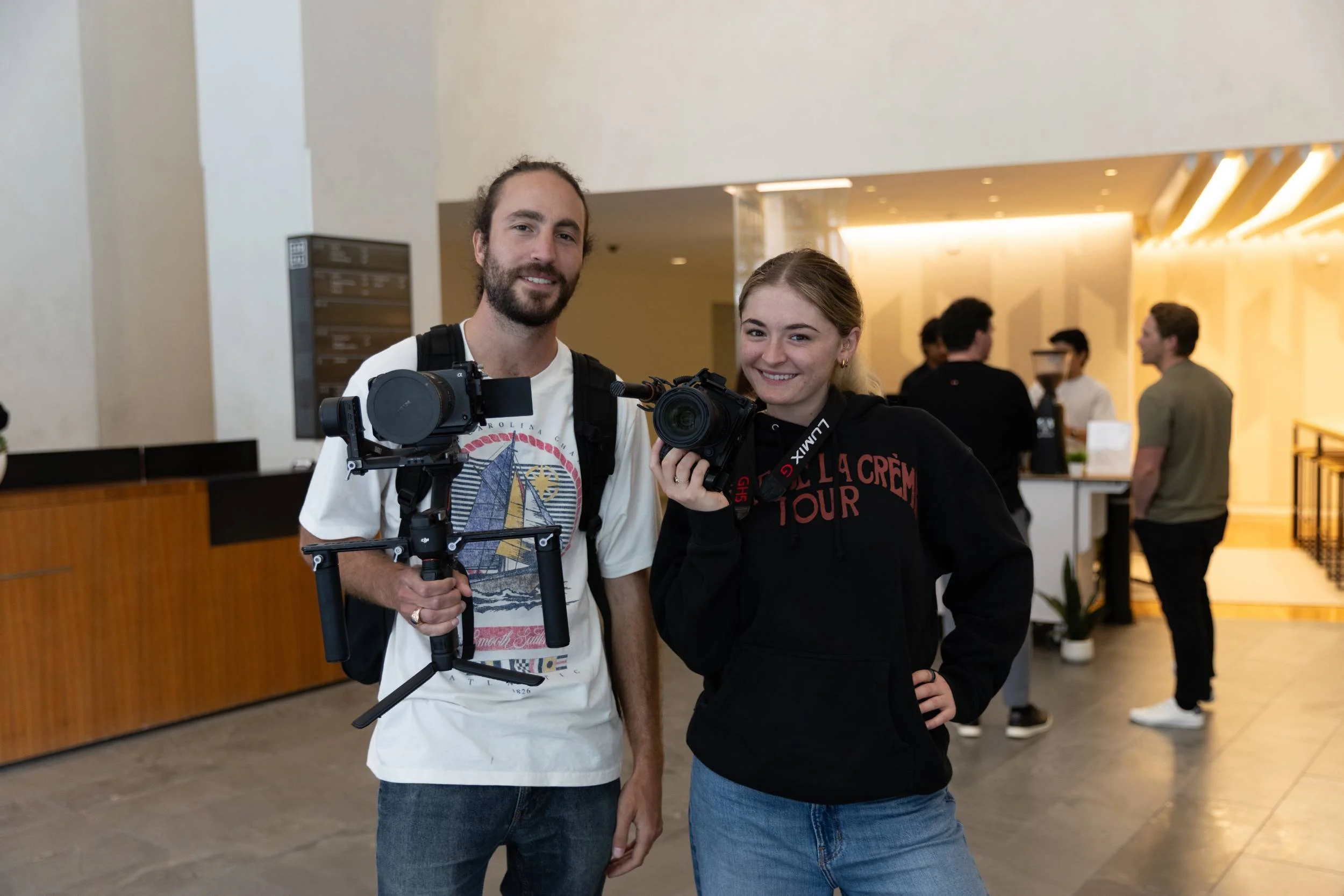
Johnny our Associate Videographer (left) and Ryan our PA (right) posing during a small break during the morning filming block.
Casting Three Commuters
Every storyline needed someone who could believably be that commuter.
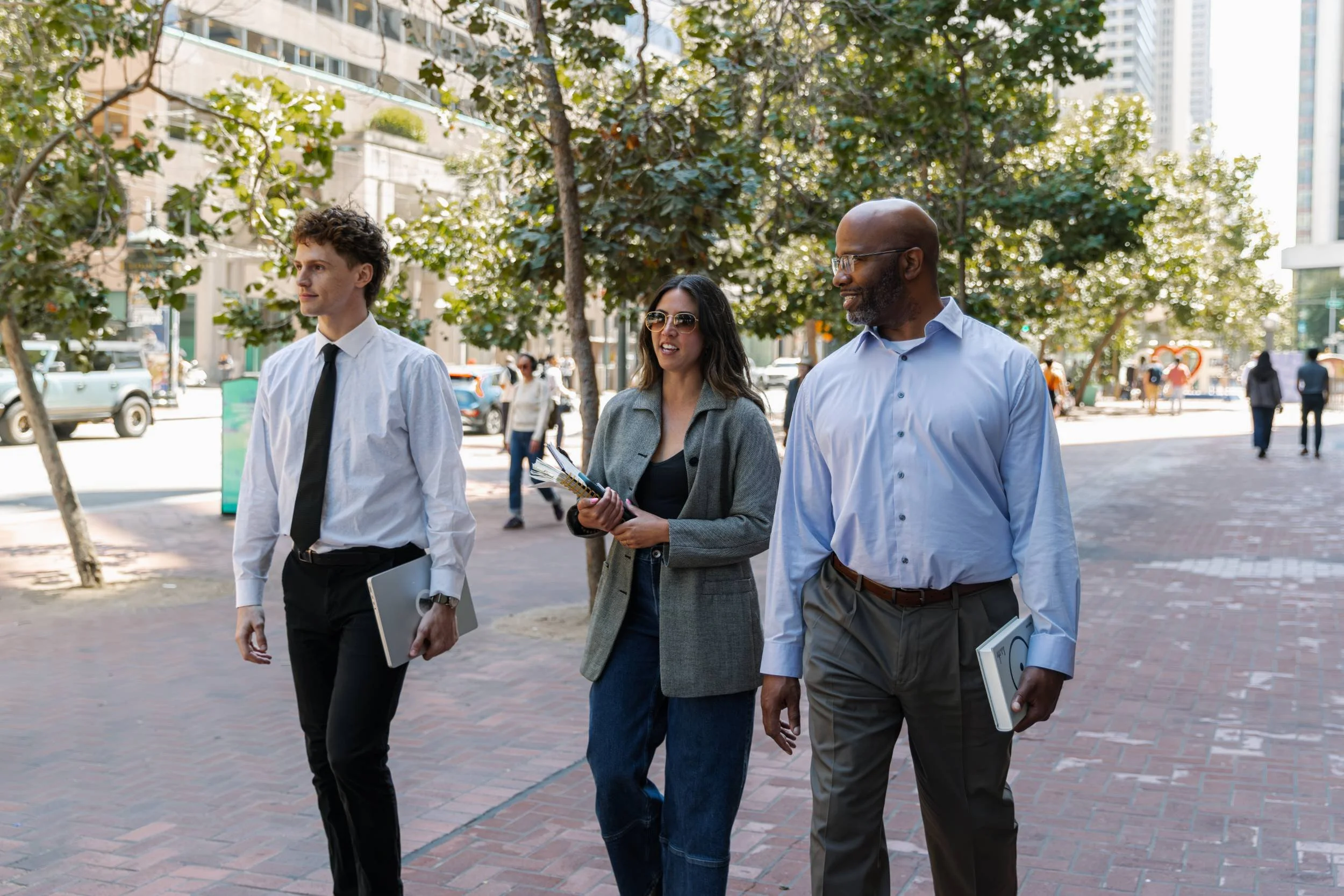
Tyler already bikes all over the city, so his storyline was pretty much his real life with a better outfit. Sam was a natural fit for the transit side. I'd worked with both of them before, and they bring an easy, real energy on camera that's hard to fake. Ant rounded out the cast.
Each actor got a "what to bring" list with two outfits (one workout, one corporate) plus laptops, notebooks and headphones so the spec suite looked like a busy office. Tyler brought his own bike and helmet.
Permits, Insurance and the Unglamorous Stuff
Anna (KBM Producer) was incredibly helpful in producing this project - keeping track of team schedules, lunch pick up, and permitting logistics.
It started with an SF film permit, plus a separate Port request since our walking route ran along the Embarcadero toward the Ferry Building. Both needed our certificate of insurance before they'd move, so we got that handled early.
We wrote the run of show in chronological order so the permit application read like the story itself, starting at 100 California and ending on the walk back from the water. It made the city's review easier and gave the crew one clear route for the day. The sunset facade shots went to the drone.
Then there's the stuff nobody puts in a highlight reel, which is honestly where shoots are won or lost. Anna sent parking instructions and reservation links to every cast and crew member, set up a simple way to get reimbursed for transit, and collected lunch orders ahead of time with dietary needs noted. Coffee and pastries were waiting at call time.
She also ran a crew briefing the week before and recorded it, so our A.D., who was flying back into California that day, could catch up before call. Thanks to her pre-pro, nobody showed up unprepared.
On the Day: One Building, Three Ways In
Call time was 7:45 a.m. in the lobby.
We started with arrivals while FiDi still had that early-morning rhythm. Tyler, in full commuter gear, rode up Sacramento Street and parked in the bike area. Ant and Sam came up the escalators out of Embarcadero BART and walked into the lobby, where the doorman greeted them like regulars. Featuring one of the building’s rotating coffee carts helped bring 100 California’s tenant experience to life, demonstrating how building-wide programming creates a more welcoming and engaging workplace.
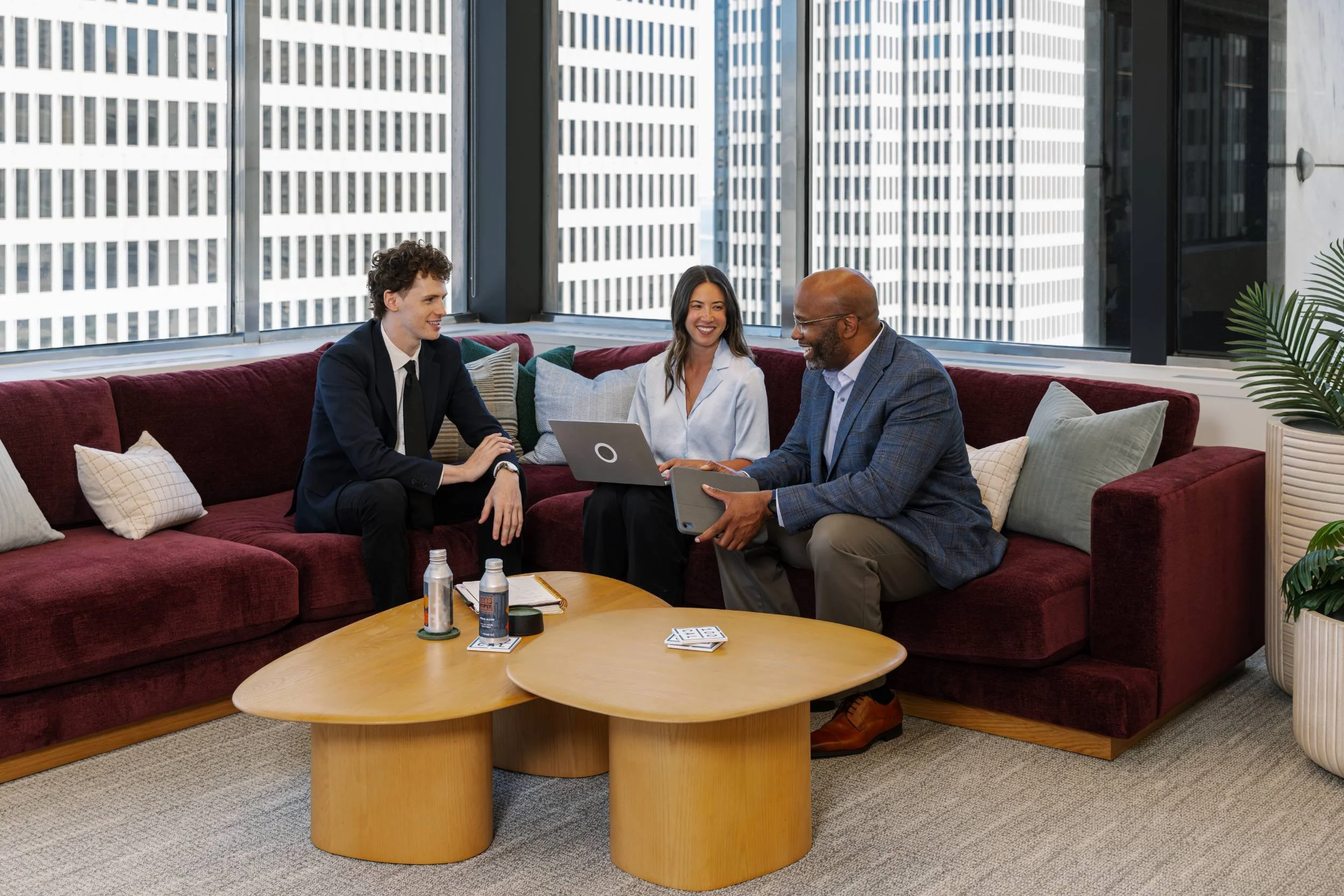
Then we moved upstairs. The elevator decal shot took the actors from the lobby to the Spec Suite, where we filmed the "at work" scenes with laptops open, a quick standup and someone booking a conference room on my100Cal. After that came the gym, the conference spaces and the lounges.
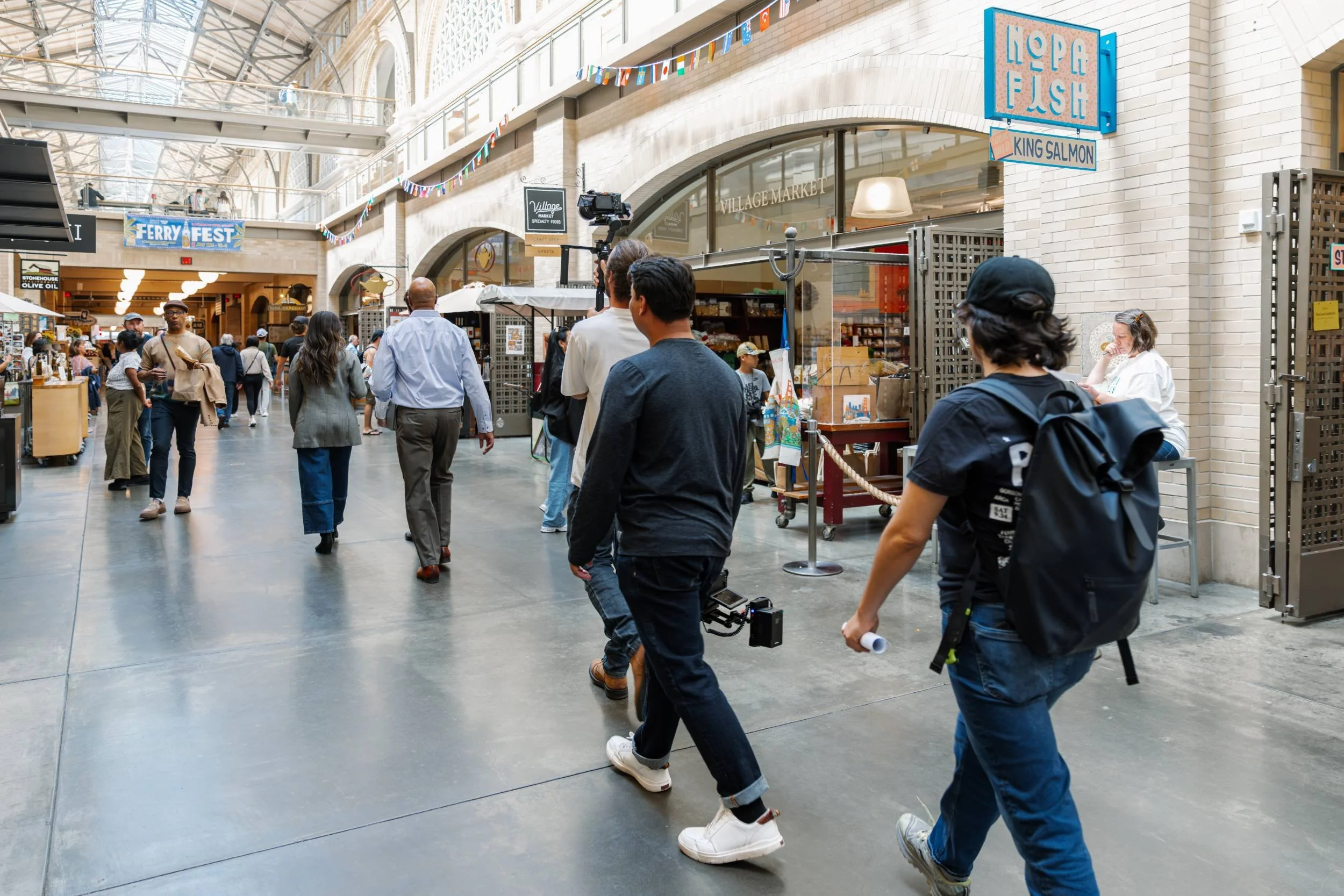
After lunch we took production outside. The route ran from 100 California down to California and Drum, past the cable car turnaround, across Embarcadero Plaza and out to the Ferry Building, with MIXT sneaking into a few frames along the way.
On the walk back we stumbled into an Embarcadero Center passage with a mosaic floor that looked better on camera than anything I'd scouted.
We wrapped with all three actors leaving the building together, then put the drone up for sunset shots of the facade.
It was roughly a seven-person crew + three-cast members, with Anna Producing, Ileana as A.D., Angela on hair and makeup, Rachel as our Photographer, Ryan as a P.A. and Johnny as Associate Videographer.
Any full day with three actors moving through public spaces is a juggling act. The light on the Embarcadero changes by the hour, and downtown gets busier as the morning goes on. What kept us on track was the work we'd already put in during June. Everyone had seen the scout photos, the storyboard and the run of show, so nobody was figuring out the plan on the sidewalk.
What Pembroke Walked Away With
Pembroke ended up with four finished video deliverables. The hero video runs about two minutes and follows all three storylines from commute to sunset, and there's a mini hero cut for quicker placements. We also delivered an amenities video that walks through the building's spaces and a lifestyle video focused on the neighborhood and the day-to-day.
On top of that, they have a full library of edited photos from both the photo day and the shoot, ready to go for leasing, web and social.
What This Project Reinforced
Converging storylines work really well for buildings. They let you show transit, amenities and the neighborhood in one piece without it feeling like a checklist. If you're marketing an office property, think about who walks in the door every morning and how they got there. That's your story.
Doing a photo day first paid off twice. Pembroke had photos weeks before the video, and we showed up on June 30 already knowing the light, the layout and how long each move would take. On a shoot with actors and a full crew, that kind of prep is worth more than any piece of gear.
Storyboards with real visuals got us to approval faster than any written treatment I've ever sent. Most of the best decisions on this project happened in June, not on set.
And on anything with real VFX, I lock the edit, grade, then clean, and I walk the client through that order before the first cut goes out. That way nobody is surprised by what's coming next.
If you're working on something similar, check out how we handled a multi-city brand activation for Sparkling Ice and how we approached a brand story video that feels like a film. Our San Francisco video production page covers the rest of what we do.
If you’re interested in learning more about 100 Cal, check out their website www.100california.com.
Frequently Asked Questions About Commercial Real Estate Video in San Francisco
-
It's a short commercial that follows people through a normal workday at the property, from the commute in to the walk out, so viewers see the amenities in context instead of on a feature list. For 100 California, we followed three commuters arriving by bike and BART and let the building be where their days connected.
-
It depends mostly on crew size, talent, locations and how much post-production the piece needs. A full shoot day with actors, hair and makeup, permits and a full crew is on the higher end. A simpler amenities walkthrough with a smaller crew costs a lot less. The easiest way to scope it is a quick walkthrough of your building and what you're trying to accomplish.
-
For a commercial shoot with crew and talent on public sidewalks, yes. We applied through the city's film office on sf.gov, and since part of our route ran along Port property near the Ferry Building, we filed a separate Port request too. Give yourself a couple of weeks and have your certificate of insurance ready before you apply.
-
Pre-production usually takes one to two weeks, and the shoot itself is often a single day, sometimes with a separate photo day before it. Post depends on how many cuts you need and how much VFX polish the piece calls for, so we map out the timeline with you before the first edit.
-
Yes, it just takes ownerships approval and pre-planning. We worked around members using the gym, set up base camp on one floor and planned shots so tenants could keep moving through the lobby. Coordinating property management ahead of time is what makes it work.
-
Actors give you control over wardrobe, timing and retakes, which matters a lot when you're moving through public spaces on a permit schedule. Real tenants feel more authentic but are harder to schedule. A lot of buildings mix the two, with actors carrying the story and real people in the background. It’s always important to gather consent from any tenants or people of the public participating in video and photoshoots.
-
At minimum, a hero video for the website and broker outreach, a shorter cutdown for social and email, and an amenities walkthrough. A lifestyle piece about the neighborhood and a fresh photo library round it out nicely.
Ready to Show People What It's Like to Work in Your Building?
If you manage or market a commercial property in the Bay Area and want a video with real people in it, let's talk. We'll walk through your building and your audience and map out what a shoot day could look like from the first scout to the last sunset shot.